Nox: How Emotions Become a Space
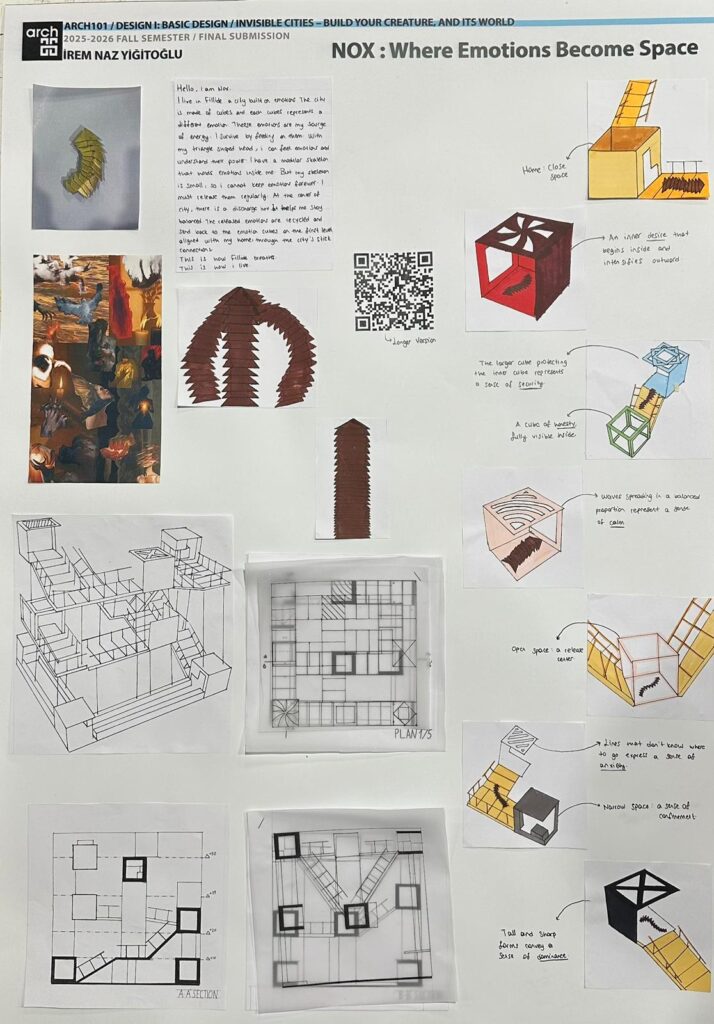
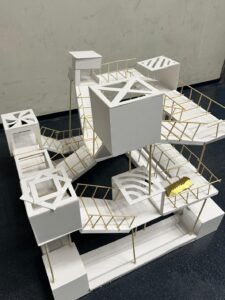
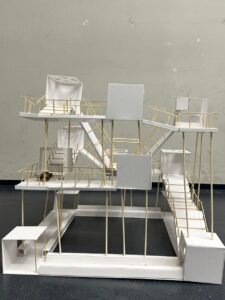
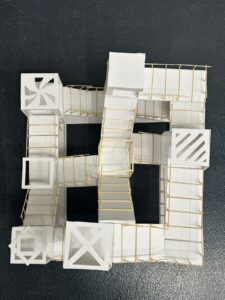
Fillide is an experiential city built on emotions, where the abstract and the structural are intertwined. The city is composed of cubes, each representing a different emotion. These cubes are not only spatial units but also energy sources where emotions are materialized. The structural language of Fillide is modular; cubes connected by stick systems enable circulation and emotional flow throughout the city. Every structural decision in the city is based on the storage, transfer, and recycling of emotions. The discharge box located at the center functions as the balance point of this cycle and makes the continuity of Fillide possible. Nox, who lives in this city, is an active part of Fillide’s emotional system. With its triangle-shaped head, Nox perceives, feels, and distinguishes the emotions around it. Its modular skeletal structure allows emotions to be temporarily trapped inside the body. However, this skeleton has a limited capacity; therefore, Nox must release emotions at regular intervals. This necessity turns the discharge box into not just an architectural focal point, but a vital threshold for survival. Nox’s home is positioned at the same level as the emotional recycling system. The emotion cubes located on the first level, aligned with the house, are connected to the discharge box through stick connections. In everyday life, Nox returns the emotions it collects back to the city through this system. The recycled emotions are redistributed to the cubes, allowing Fillide’s emotional cycle to continue. In this process, living does not simply mean sheltering; it means sensing, maintaining balance, and existing together with emotions.