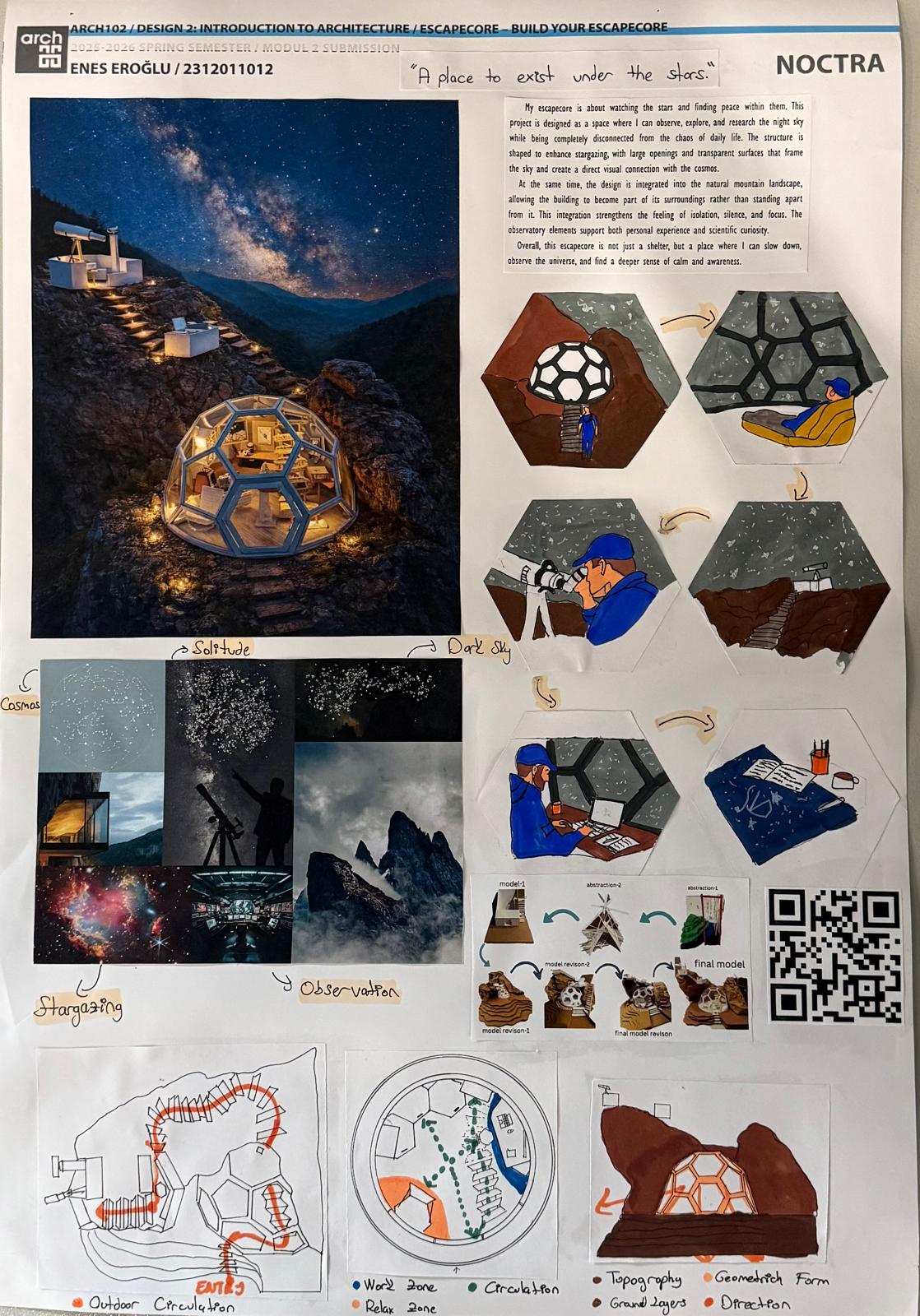
NOCTRA — A Place to Exist Under the Stars
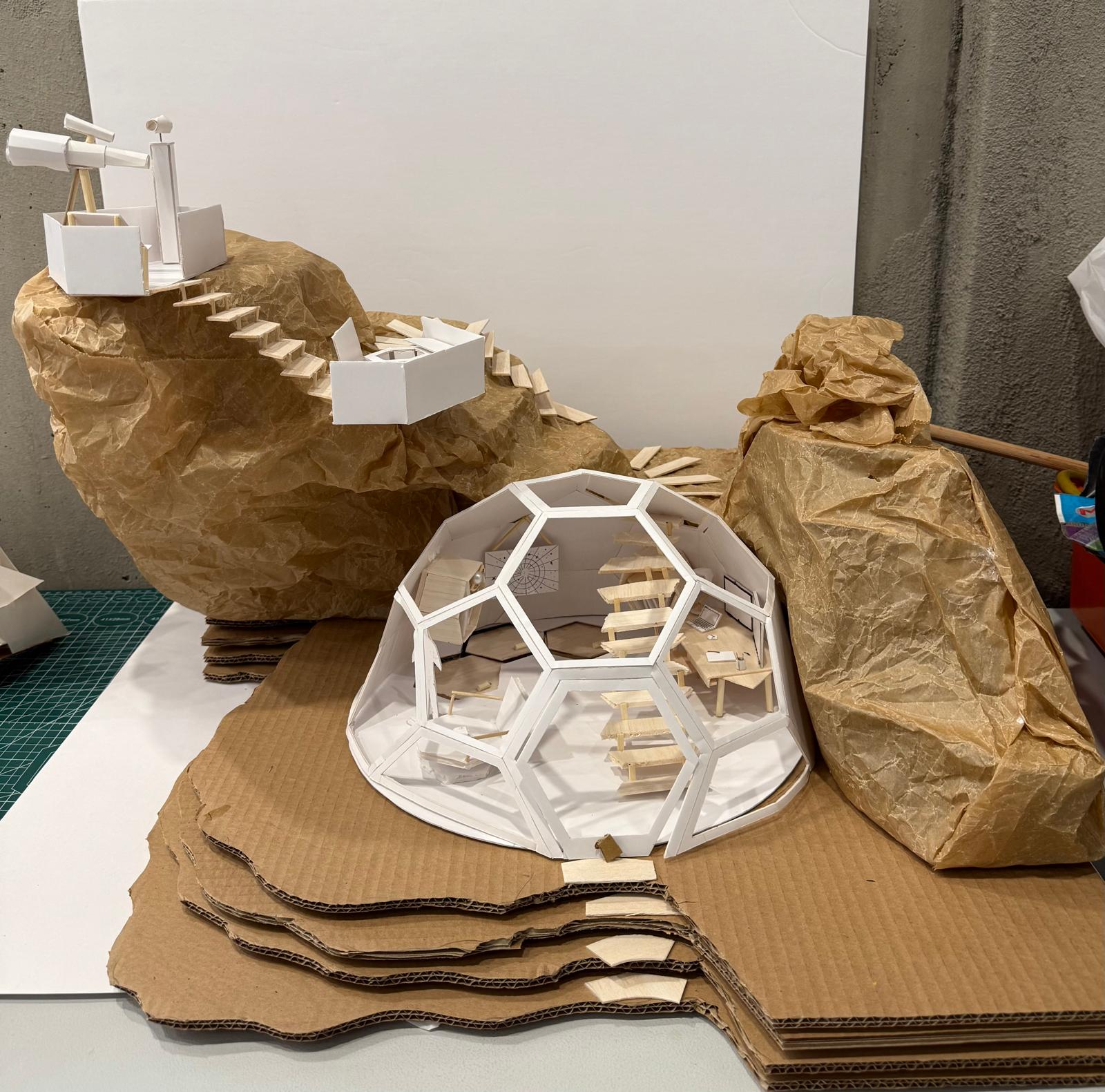
NOCTRA is an architectural retreat designed to reconnect people with the night sky and the quiet rhythm of nature. Conceived as an escape from the intensity of contemporary life, the project creates a space where observation, reflection, and discovery become part of everyday experience. Positioned within a mountainous landscape, the structure responds carefully to its context, merging with the terrain rather than dominating it. Its form follows the contours of the land, allowing the building to feel like a natural extension of the environment. The architectural language of NOCTRA is defined by openness and transparency. Large glazed surfaces and strategically oriented openings frame celestial views, transforming the sky into a living architectural element. During the day, natural light filters through the structure, while at night the building becomes an observatory-like refuge where users can engage directly with the cosmos. The material palette emphasizes simplicity, durability, and harmony with the surrounding landscape, creating an atmosphere of calm and contemplation. Every spatial decision supports a sense of isolation, focus, and awareness, encouraging visitors to slow down and experience time differently. A typical day at NOCTRA begins with the first light touching the mountains, gently illuminating the interior spaces. The user wakes to panoramic views of nature, spending the morning in quiet reflection or exploration of the surrounding landscape. As daylight fades, the retreat gradually shifts its focus toward the sky. The user settles into observation spaces, watching the stars emerge one by one above the horizon. Free from urban distractions, the night becomes an immersive experience of wonder and discovery. In these moments, NOCTRA is more than a shelter; it becomes a bridge between the individual, the landscape, and the infinite universe beyond, offering a rare sense of peace, curiosity, and belonging.
ASTERIA
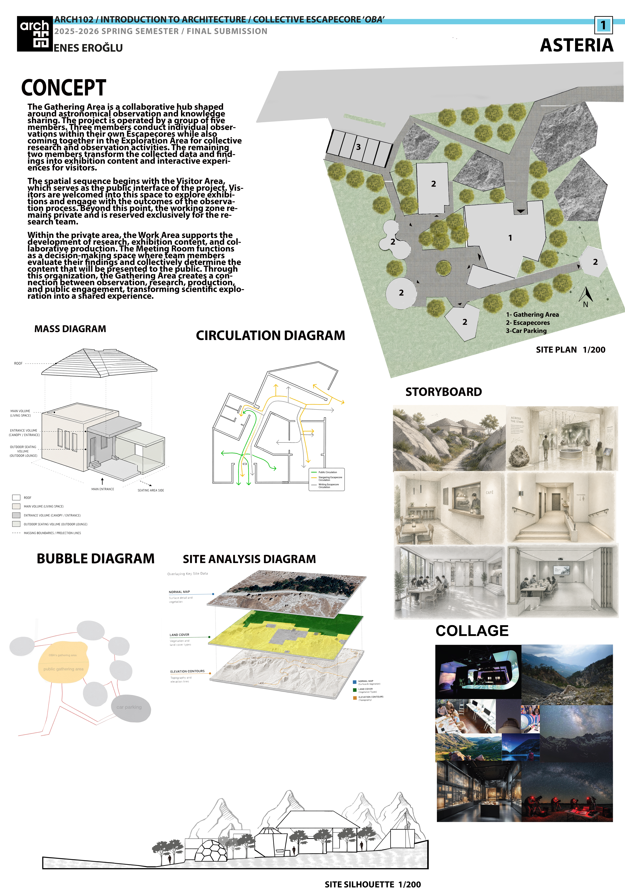
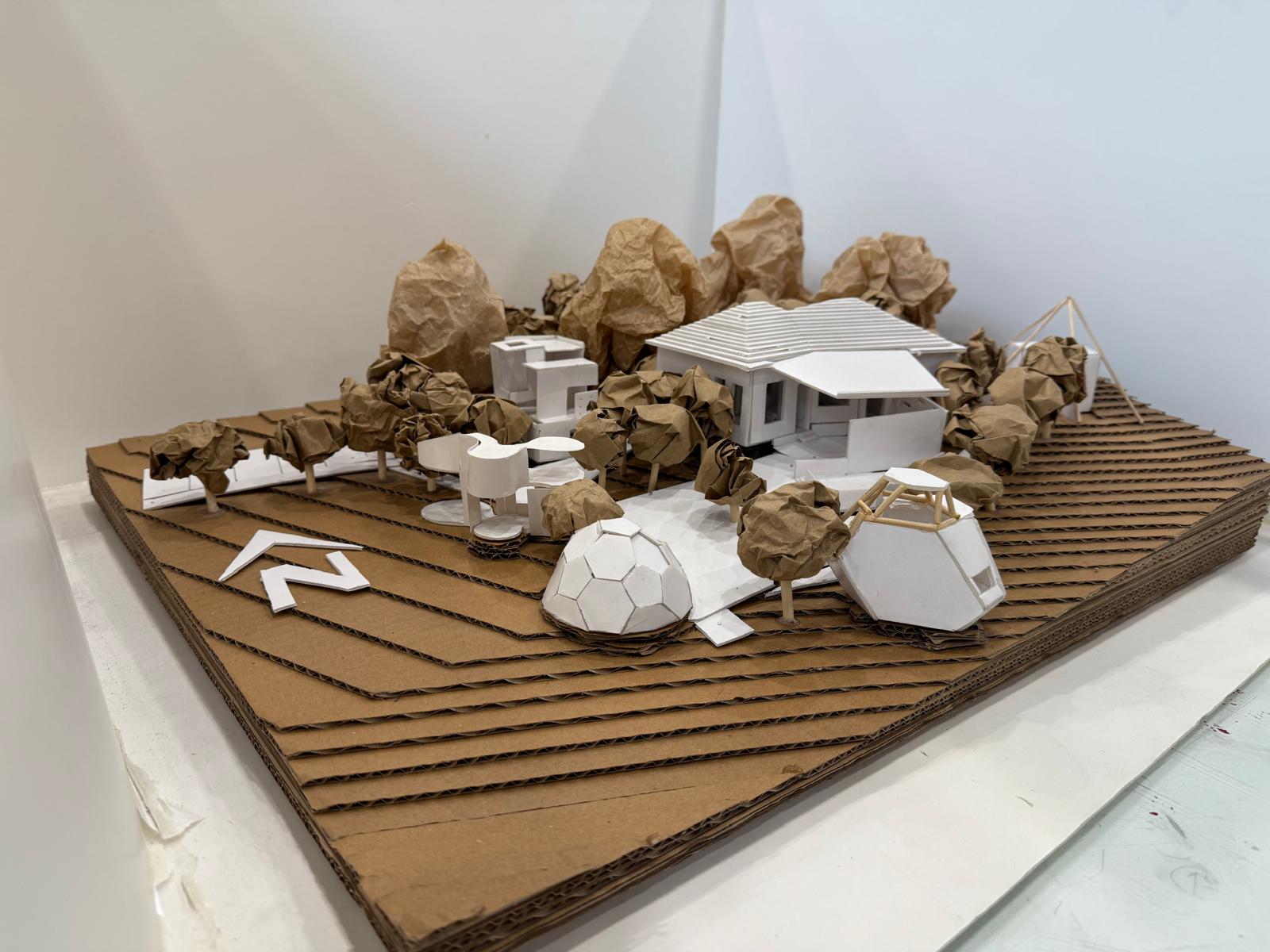
ASTERIA is envisioned as a collaborative observatory where scientific exploration, collective learning, and public engagement converge within a unified spatial framework. Inspired by the process of astronomical observation, the project transforms individual discoveries into shared knowledge, creating a dialogue between research and society. Rather than functioning solely as an observatory, ASTERIA operates as a living environment where observation, interpretation, production, and exhibition continuously interact.
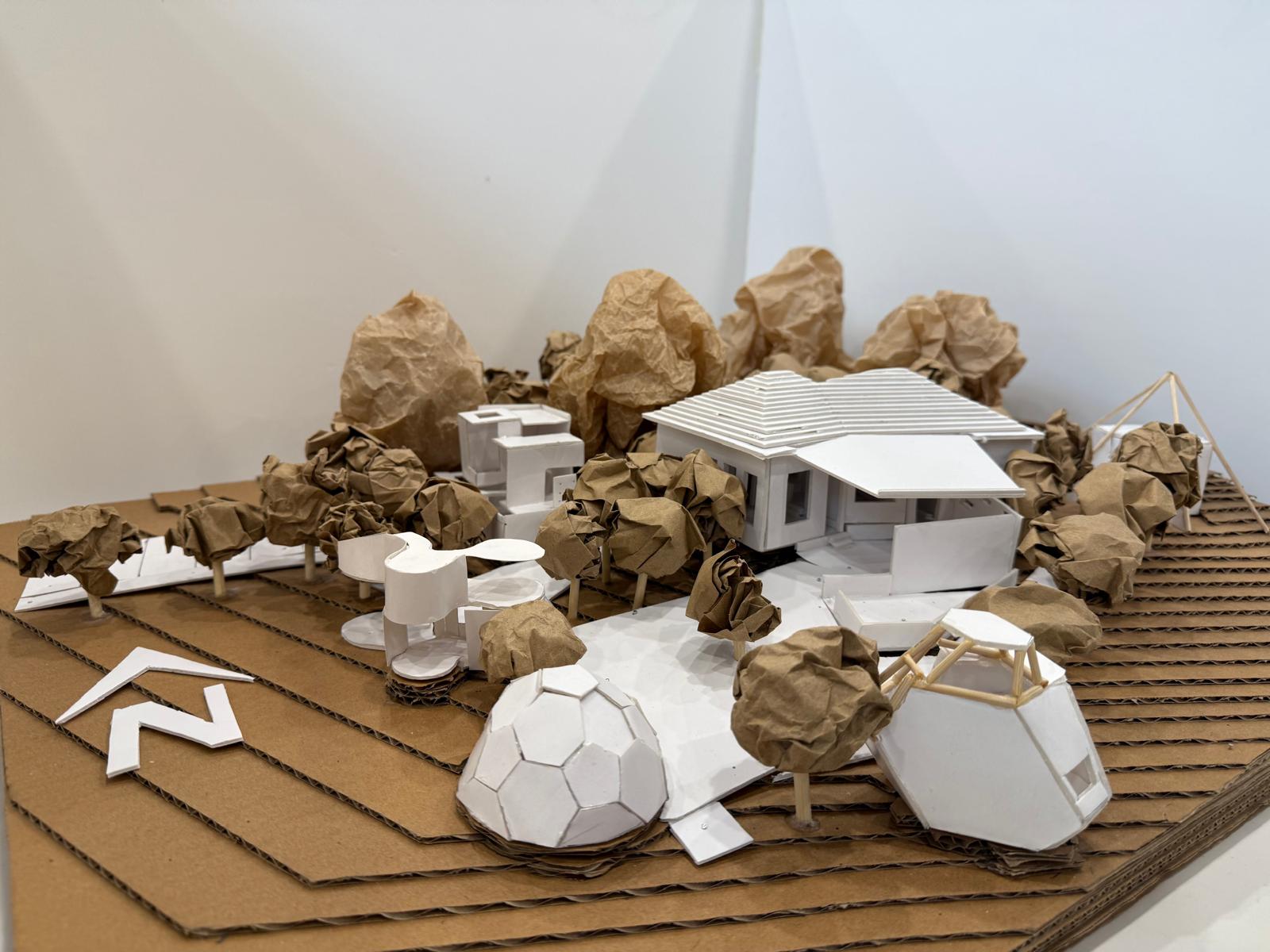
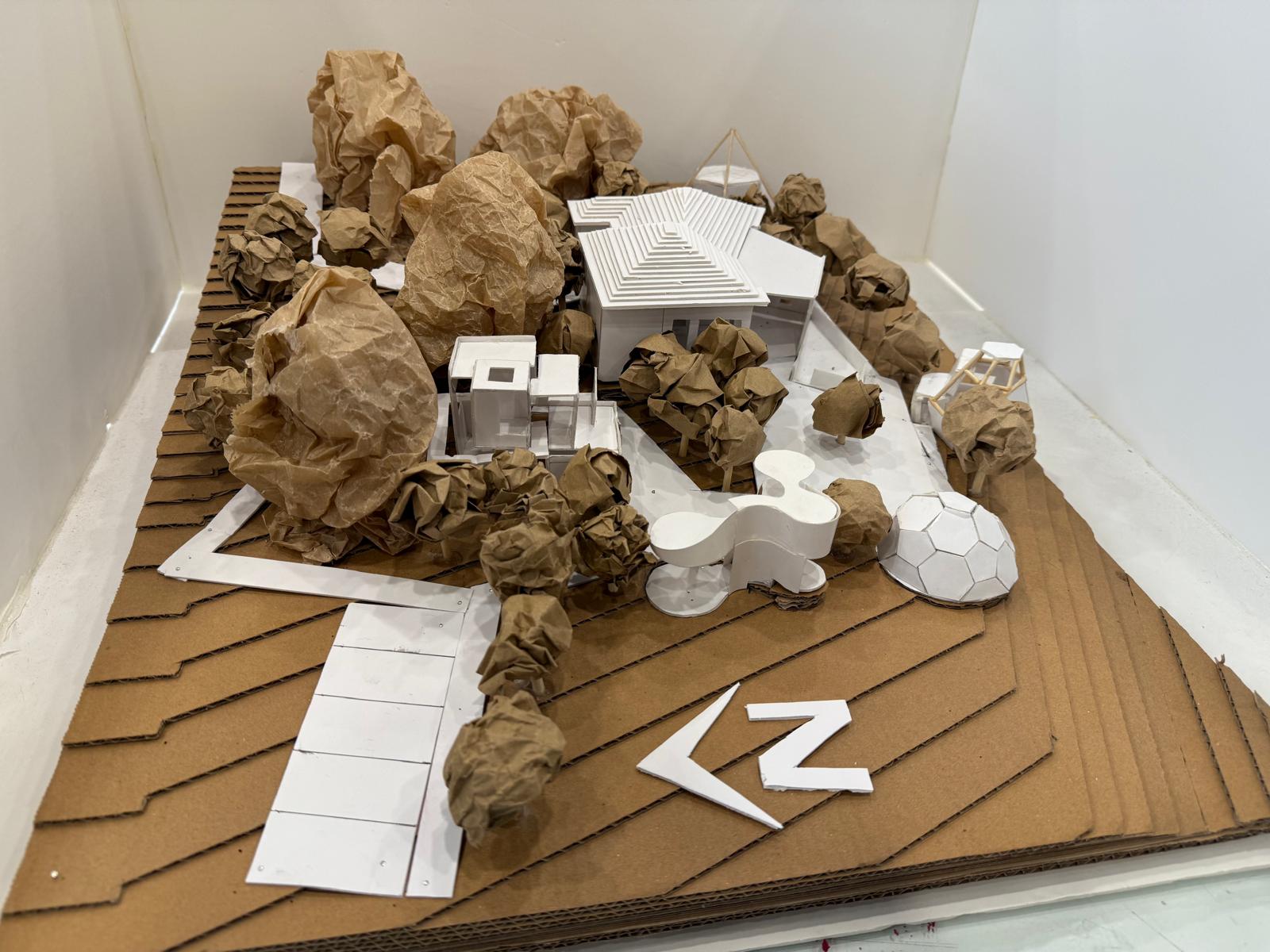
The project is organized around a team of five researchers. Three members conduct independent observations within their private Escapecores, generating data and personal insights through focused exploration. These findings are brought together in the Exploration Area, where collective analysis and discussion take place. The remaining team members curate and translate the gathered information into exhibitions and interactive experiences, making scientific knowledge accessible to a wider audience.
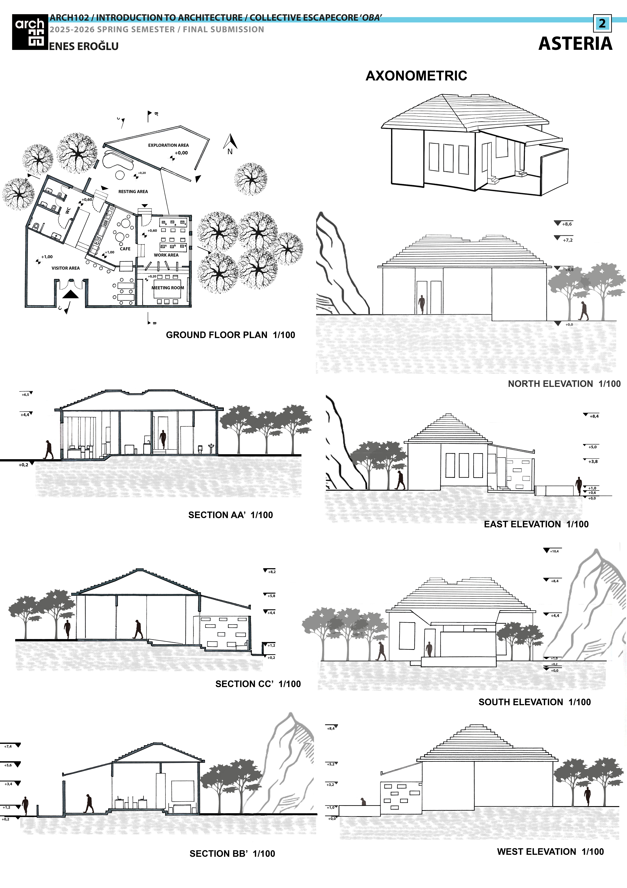
A clear spatial hierarchy defines the architectural character of the project. The Visitor Area serves as the public interface, welcoming guests into an environment of discovery and engagement. Here, exhibitions communicate the outcomes of ongoing research through immersive and interactive displays. Beyond this threshold lies the private research zone, designed to support concentration, collaboration, and knowledge production. The Work Area facilitates the development of research outputs and exhibition content, while the Meeting Room functions as the decision-making core where ideas are evaluated and transformed into public narratives.
The architectural experience of ASTERIA is shaped by a progression from solitude to collectivity, from observation to communication. A typical day begins with researchers working independently within their observation spaces. As new findings emerge, they gather in shared areas to exchange ideas, compare results, and develop interpretations. Visitors encounter the final outcomes of this process, experiencing science not as a distant discipline but as an active and evolving journey. Through this relationship between research and public participation, ASTERIA transforms astronomical exploration into a shared cultural experience.