HEXY IN STANA
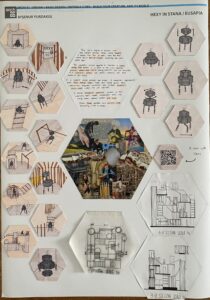
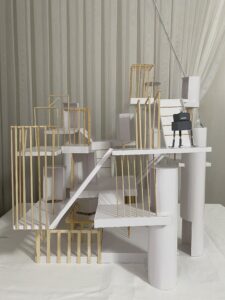
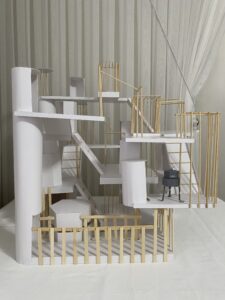
Stana is a speculative architectural project designed for a single species living under conditions of scarcity. The project focuses on how architecture can organize movement, feeding, and competition through a layered spatial system. Rather than providing comfort or freedom, the city structures daily life by limiting access to resources and forcing continuous movement.The city of Stana is organized as a layered vertical system composed of platforms, feeding zones, and a single real nourishment area. While multiple spaces resemble feeding points, only one functions as an actual source of food. The remaining zones act as deceptive environments, forcing users to evaluate risk, proximity, and timing. As the distance to the real feeding zone increases, hunger intensifies and transforms into a psychological fear, triggering competition among creatures.Hexy, the creature inhabiting Stana, is directly shaped by this architectural condition. Its body, dwelling spaces, and hiding areas all share a hexagonal geometry. This repeated form establishes a sense of safety and familiarity within an otherwise hostile environment. Open and semi-open platforms dominate the city, allowing constant visibility and making encounters between competitors unavoidable. When Hexy encounters rivals, defensive mechanisms can temporarily immobilize them, reinforcing spatial conflict within the city.Movement in Stana follows a cyclical logic. Upon reaching the real feeding zone, Hexy absorbs energy by bending and sitting, directly interacting with the architectural surface. Hexy then returns to its dwelling, and the cycle restarts.Stana proposes a city where architecture does not provide refuge but enforces survival through scarcity. Space becomes a strategic field shaped by fear, repetition, and rivalry, transforming everyday life into a continuous negotiation between body, movement, and structure.