Lumora
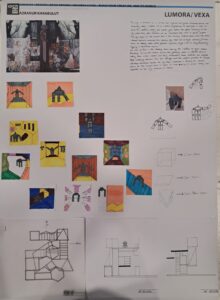
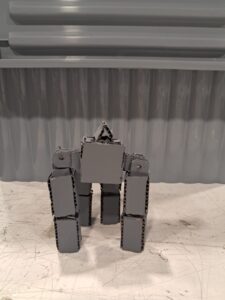
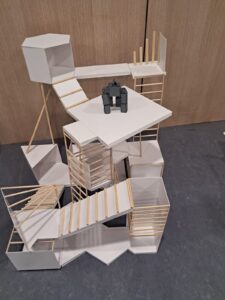
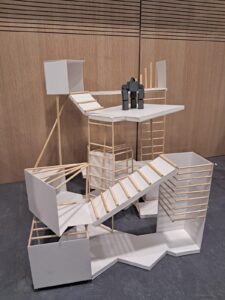
Inspired by Eusapia from Italo Calvino’s Invisible Cities, Lumora is a speculative city shaped by the coexistence of visible structures and invisible systems. Lumora operates through parallel realms that sustain one another. Here, memory is the fundamental force—an intangible yet governing resource. Rather than consisting of fixed buildings, the city exists as a metabolic system activated by the continuous movement of a single creature named Vexa. Memory functions as both a construction material and a burden, dictating circulation and urban purpose.The city is a seamless sequence of platforms, ramps, and enclosed volumes connected vertically and horizontally. These spaces act not as independent objects, but as stages guiding Vexa through cycles of release, consumption, production, and repair. Lumora’s structure is defined by profound contrasts: massive volumes create containment and withdrawal, while skeletal structures and open platforms introduce lightness and continuity. Repetitive wooden elements establish a rhythm disciplining movement, while ramps slow the creature’s pace, heightening bodily awareness. Consequently, the body becomes an active participant in the spatial experience.From Vexa’s perspective, the city is a daily cycle. The journey begins in a lower resting area with residual memories from the previous cycle. The creature enters a disposal zone to release obsolete thoughts, then a feeding area to consume positive memories. When negative memories create an imbalance, Vexa is redirected to a discharge center for purification. Once purified, the creature reaches a gathering space to receive construction data, collect materials, and finally build. The cycle concludes in a fixing space where worn body parts are repaired. Through this perpetual motion, Lumora persists not through static permanence, but instead through continuous transformation.