VİNCİT
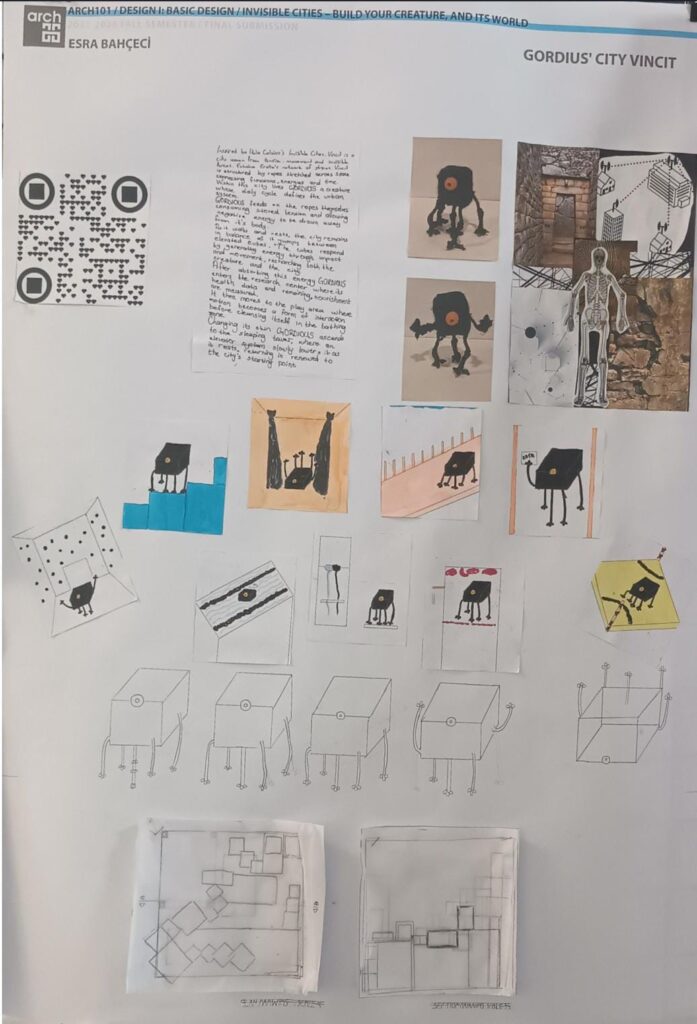
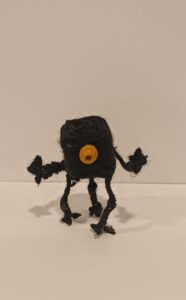
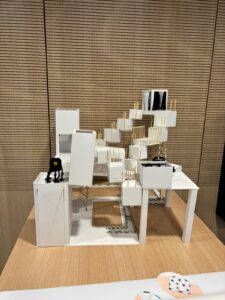
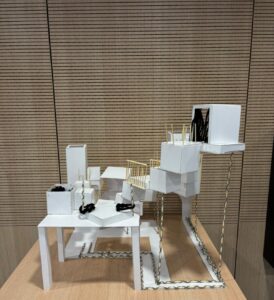
Vincit is a conceptual city inspired by Italo Calvino’s Invisible Cities, specifically the city of Ersilia, where relationships are defined not by solid forms but by invisible connections. Translating this idea into space, Vincit is constructed through ropes, suspended volumes and voids, forming a spatial network shaped by tension, movement and energy rather than conventional urban hierarchy. The city does not operate as a static architectural object; instead, it functions as a living system activated through use, motion and time. At the core of Vincit lives Gordius, a creature whose daily routine defines the city’s spatial organization. Ropes act as both structural and conceptual elements. By eating the ropes, the creature releases tension and restores balance within the system. Elevated cubes scattered throughout the city create a dynamic terrain for walking and jumping. These cubes are not passive platforms; each impact generates energy and body movements are performed by harnessing this energy. From the user’s perspective, the city is experienced as a continuous sequence. Gordius begins the day by moving through the rope network, absorbing energy and activating the space through motion. After gaining strength from the jumping cubes, it enters the research centre, where its health condition and remaining energy levels are measured. This moment of observation emphasizes the relationship between body, data and architecture. Following this, Gordius proceeds to the play and bathing areas where physical interaction and cleansing take place. After being cleansed, it changes its clothing and prepares for sleep. Finally, the creature reaches the sleep tower. This vertical space operates with an elevator system that slowly descends as the sleep percentage increases, returning Gordius to its starting level. Through this cyclical journey, Vincit becomes a city defined not by permanence but by rhythm, repetition, and transformation.