ADELİSH
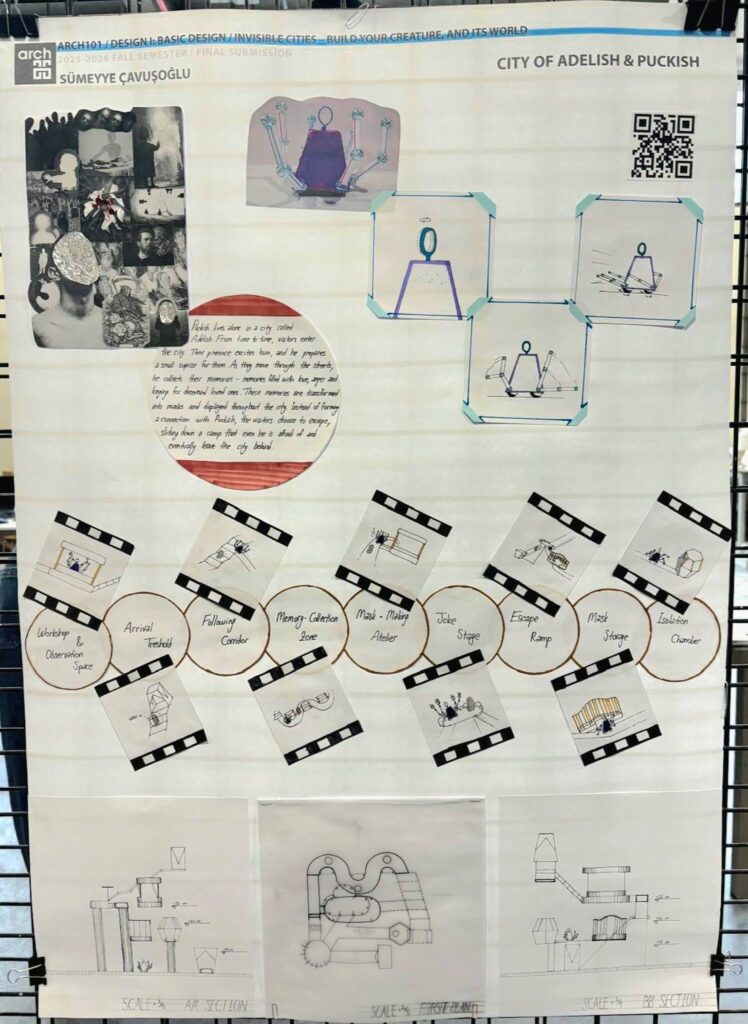
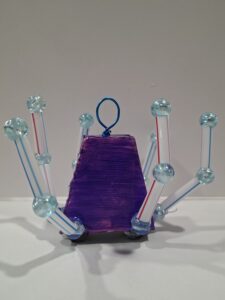
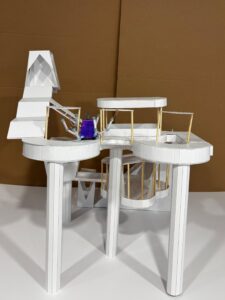
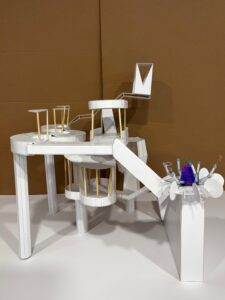
The project is set in Adelish, a speculative city shaped by absence, memory, and emotional residue. It is conceived as a spatial narrative where architecture becomes an instrument for collecting, transforming, and storing memories left behind by temporary visitors. At the center of the city lives Puckish, a solitary figure whose existence defines the city’s atmosphere and spatial logic. The project explores themes of loss, fear of connection, and the tension between intimacy and escape through a sequence of architectural spaces. Structurally, the project is organized as a linear yet fragmented system of zones: thresholds, corridors, ateliers, and chambers. Each space corresponds to a specific emotional and narrative moment. The materials are deliberately raw and muted, emphasizing shadows, texture, and bodily movement. Circulation is designed to feel both guided and uneasy, gradually pulling the visitor deeper into the city before offering a sudden and irreversible exit through the escape ramp. Architecture here does not aim to comfort; instead, it observes, records, and reflects emotional states. From a visitor’s perspective, everyday life in Adelish is both intriguing and unsettling. Upon entering the city, one feels watched but not confronted. As they walk through narrow passages and open voids, fragments of personal memories—especially those connected to deceased loved ones—seem to surface without intention. Masks appear as silent witnesses, displaying emotions of love, anger, and longing. There is a moment of humor, almost a playful relief, but it quickly turns into discomfort. Eventually, the visitor chooses to leave, sliding away from the city in haste, while Puckish remains behind. Life in Adelish continues in cycles of arrival, observation, transformation, and isolation, with architecture acting as the silent narrator of this emotional routine.