ALTIORA
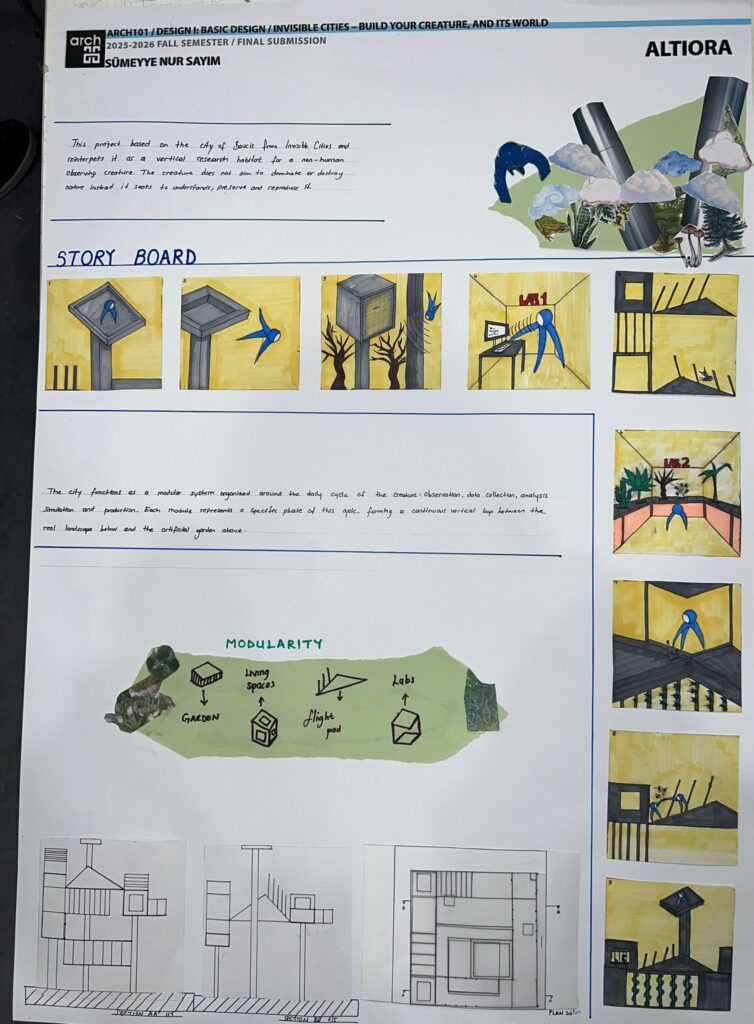
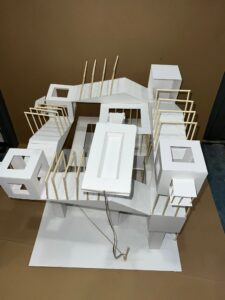
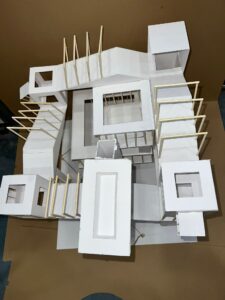
Altiora is a city that has chosen to withdraw from the surface of the earth. Inspired by Calvino’s Baucis, it rises on slender columns, distancing itself from the ground in an attempt to preserve it. The city does not conquer the land; instead, it observes it from above, transforming nature into a silent landscape rather than a lived terrain. The urban structure is composed of repeating modular units: columns, platforms, and voids that multiply and connect in a fragile equilibrium. This repetition is not only a structural strategy but also a philosophical stance. As the city grows upward, its contact with the soil diminishes. The higher it ascends, the more it believes it is protecting the earth, yet the more it becomes detached from it. Nature turns into an image to be admired rather than a space to be experienced. In Altiora, the inhabitants live suspended between sky and ground. They move across elevated walkways and platforms, never fully touching the surface below. The forest becomes a distant memory, a preserved object rather than a shared environment. This condition reflects the modern human attitude toward the world: a desire to conserve without involvement, to control without intimacy, to exist without leaving traces. The modular system creates a city that can endlessly expand, but only through repetition. Each column is a point of balance; each platform is a decision to resist gravity and emptiness. The entire settlement depends on the continuity of its elements, just as contemporary life depends on fragile networks and artificial supports.Altiora therefore stands as a metaphor for a civilization that seeks purity through distance. By lifting itself away from the earth, it aims to protect it, yet in doing so, it reveals a deeper alienation. The city floats, orderly and silent, between care and escape, between preservation and loss.