DESIDERIA
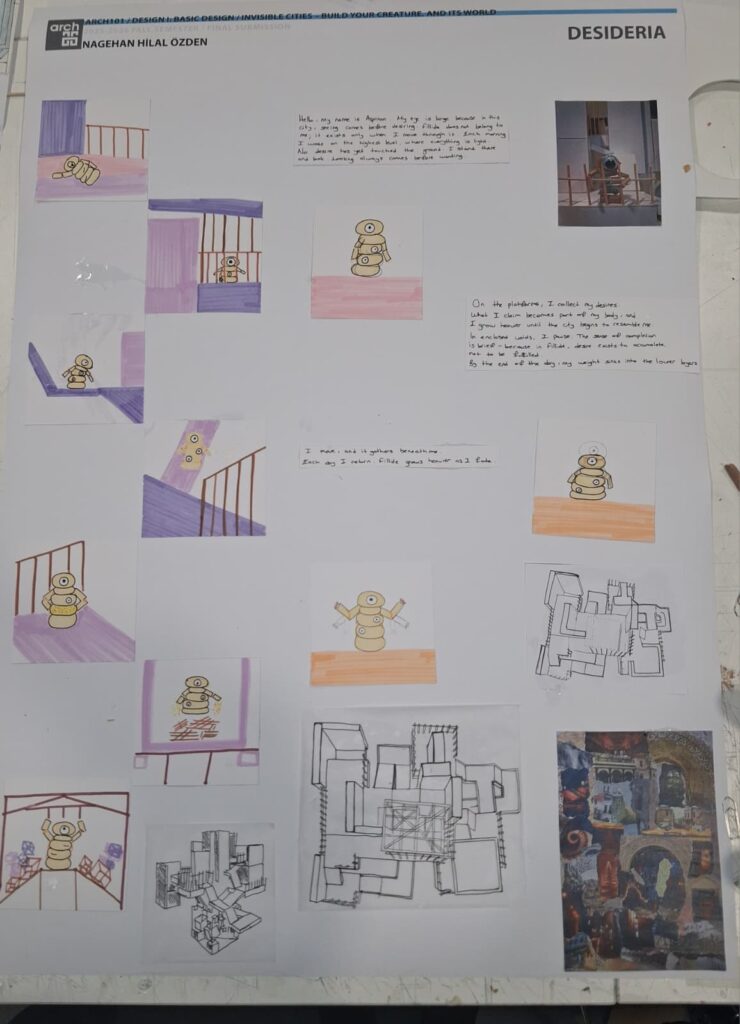
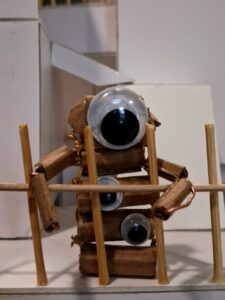
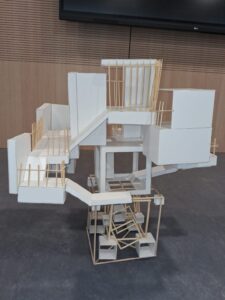
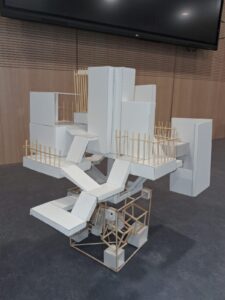
Desideria is not a static city but a living process shaped by desire. At the center of this process is a creature called Asperon, which survives by feeding on the desires embedded within the urban void. Upon awakening, Asperon scans the city with its many eyes, absorbing every desire it encounters. This act is not simple consumption; each desire is processed within Asperon’s body and transformed into the raw material of the city itself. The upper structure of Desideria takes the form of a complex, labyrinth-like system of paths. These pathways represent Asperon’s endless search and insatiable appetite. As it moves through this labyrinth, Asperon collects desires and stacks them onto its own body, turning them into physical layers. Architecture here becomes an active construction site: the white ramps in the upper part of the model symbolize this continuous movement, accumulation, and becoming.However, Asperon’s tragedy emerges when the desires it gathers no longer align with the paths it follows. When it enters an unfitting route—one that fails to meet its expectations—the accumulated weight of these desires transforms from a source of growth into a force of destruction. The deep gaps and abrupt endings of the ramps represent moments of incompatibility, disillusionment, and collapse. Overburdened by its own collected desires, Asperon ultimately crumbles and falls. This fall marks the main moment of production in Desideria. The processed desires scattered from Asperon’s fragmented body settle into the lower layers of the city, forming a massive and permanent structure. The wooden skeletal frame and small cubes at the base of the model represent this solidified memory and foundation. As Asperon disappears as a subject, the desires it once gathered remain, becoming the physical body of the city itself. In Desideria, desire is transformed into architecture, and Asperon endures only as the memory embedded within the city.