LIVING REMAINS
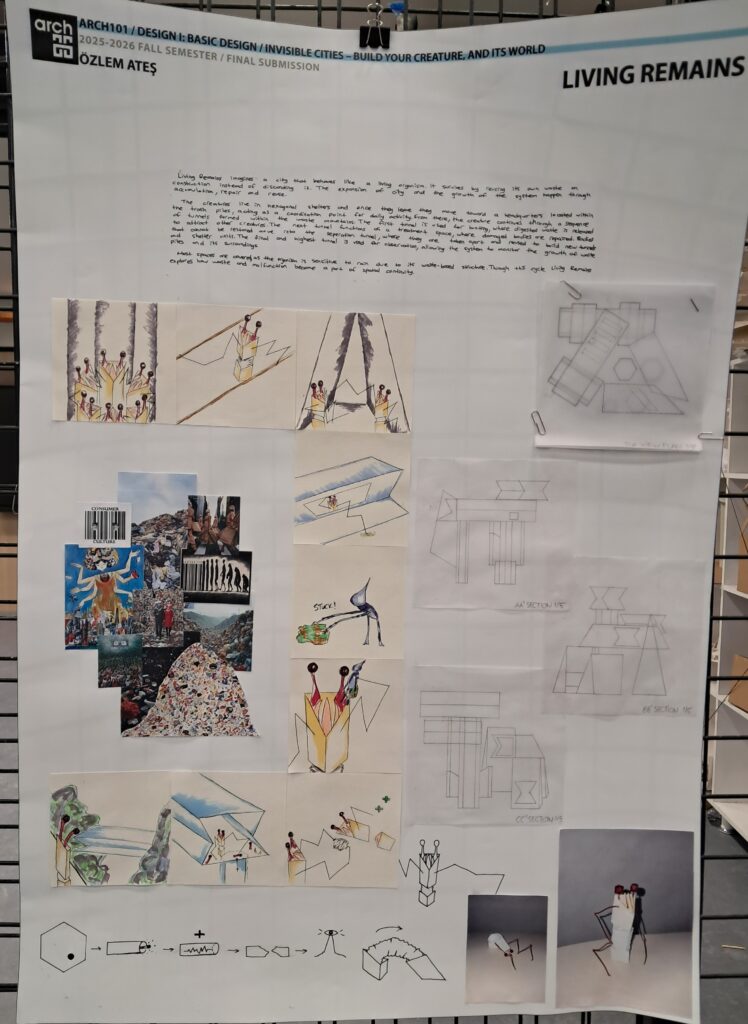
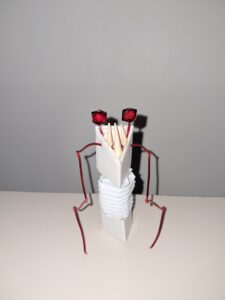
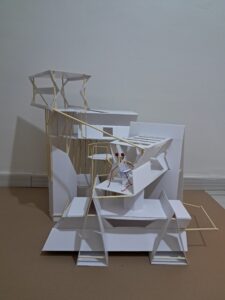
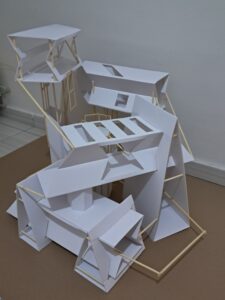
Living Remains is inspired by Leonia, a city in Invisible Cities by Italo Calvino, where renewal shapes everyday life. In Leonia, objects are constantly replaced for cleanliness and causing the waste produced by this renewal continue to accumulate. While Leonia depends on constant replacement, the project is based on the continuous reuse and transformation of what remains. Within the trash mountains, a living creature named Accumula moves, hunts, and keeps the system running. Its form reflects Leonia’s capitalist logic, inspired by the silhouette of a triangular corporate building. The creature has long, jointed arms to move across the paths they have designed, and an accordion-like waist that allows it to bend and to move flexibly. They come out of hexagonal shelter units, where each unit holds six Accumulas, gather briefly at a headquarters embedded within the waste pile, and then move through tunnels for hunting, treatment, separation, and observation. The daily routine of Accumula begins after leaving the shelter units and passing through a shared headquarters. From there, it moves into the tunnel system, starting with hunting in the lowest tunnel, where it releases its own digested waste through openings in the tunnel to attract other creatures into a trap from outside. Afterward, it passes through tunnels for treatment and separation, where damaged bodies are either repaired or reused as material. When reuse is selected, these materials are transferred through long hexagonal pipeline connected to the separation tunnel, to the outer edges of the city to enable expansion and new construction. The routine ends in the highest tunnel which is used for observation. Then the cycle repeats. Through this system, Living Remains focuses on the persistence of spaces rather than constant replacement. The city demonstrates continuous adaptation, where accumulation and transformation support both the organism and its environment.