SİXTH DİEMOTİON
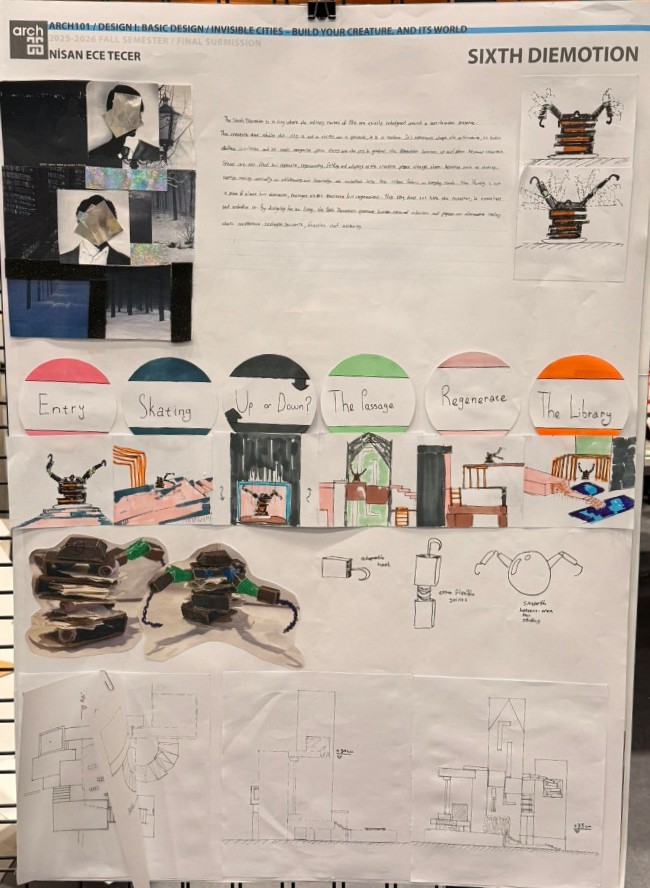
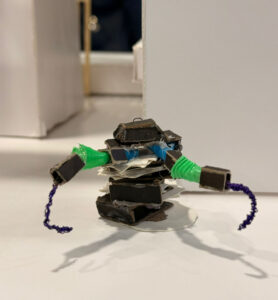
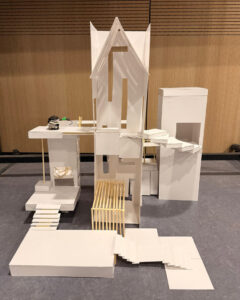
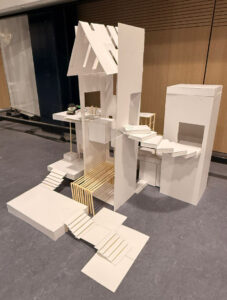
Sixth Diemotion is a speculative city designed as a spatial extension of memory, emotion, and accumulated knowledge. The city belongs to Adelma, not as a physical territory but as an inner archive shaped by lived experiences. At the center of this system exists The Keeper, a creature responsible for collecting, storing, and regulating Adelma’s information and emotional residues. Rather than acting as a destructive force, The Keeper functions as a stabilizer that maintains continuity within the city. The urban structure of Sixth Diemotion is organized around the daily routines of The Keeper. Spaces are not defined by conventional human programs but by repetitive actions such as entering, moving, pausing, ascending or descending, regenerating and observing. These actions are translated into architectural sequences that create a fluid circulation system. As a result, spatial hierarchy remains unstable; boundaries between up and down, interior and exterior, and transition and destination are intentionally blurred. Each programmatic zone, Entry, Skating, The Elevator, Passage, Regeneration Area and Library represents a different mode of interaction between memory and space. The Library functions as a storage field where collected information and emotions are layered rather than categorized. Regeneration spaces allow the city to adapt and reorganize itself according to the Keeper’s activity, emphasizing responsiveness over permanence. Sixth Diemotion challenges human-centered urban design by proposing a city that adapts to presence instead of controlling it. Architecture becomes reactive rather than dominant, shaped by routine rather than authority. Through this approach, the project explores coexistence, emotional accumulation and non-linear memory as active forces in spatial production, offering an alternative understanding of how cities can be formed, experienced and sustained. So; time is non-linear within Sixth Diemotion. Surfaces respond to movement, materials record repeated actions and silence functions as data. Spaces may shift without warning, yet memory remains the city’s only constant reference.