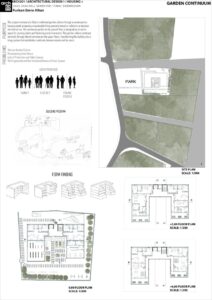
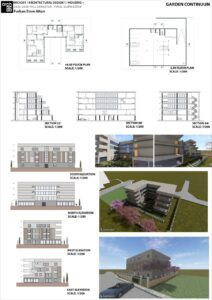
Garden Continuum is an architectural project that reinterprets Talas’ traditional garden culture through a contemporary residential model. The project approaches the garden not only as a place of production, but also as a space that shapes daily life, enhances social interaction, and supports a sense of community. By re-evaluating current needs, a living scenario is proposed that establishes continuity between nature, the user, and the built environment.
The main design approach of the project is based on the concepts of collective production and shared use. The communal garden, located on the ground floor, is designed as the social and productive hub of the building. This area encourages users to come together through activities such as planting, harvesting, and daily gatherings. Rather than functioning as a simple landscaping element, the garden is transformed into an active living space that supports social interaction.
This garden culture continues vertically through shared terraces on the upper floors. These terraces are designed as semi-public spaces where users can grow plants, relax, and gather. By extending the garden vertically, the building is approached as a living system in which nature becomes an integral part of everyday life. This strategy strengthens the relationship between different floors while fostering a collective sense of community among users.
Architecturally, the project prioritises openness, accessibility, and continuity between interior and exterior spaces. Through the voids and terraces created within the massing, natural light, ventilation, and green spaces are integrated into the building. In conclusion, Garden Continuum proposes an alternative lifestyle model that combines traditional values with a contemporary approach to housing, offering a sustainable, collaborative, and nature-oriented way of living.