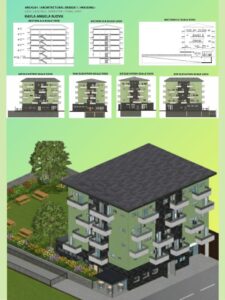
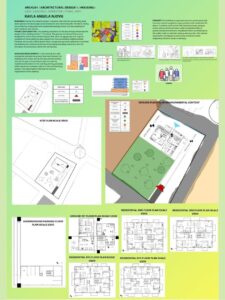
This project proposes a Housing+ apartment complex designed to respond to the lack of community-oriented spaces in the surrounding area. The site is primarily surrounded by residential buildings and vacant plots, offering limited opportunities for social interaction. This condition creates an environment that can feel isolated, particularly for residents who lack access to shared amenities. The project addresses this issue by integrating community functions directly into the residential building, transforming it into a social hub for both residents and the surrounding neighbourhood.
The core concept of the design is to promote social connection through shared daily activities. Rather than treating housing as a purely private program, the project embraces the Housing+ approach by combining residential units with semi-private units. These semi private units include a Café & Board Game Lounge and a gym. These functions are intentionally inclusive, welcoming people of all ages and encouraging interaction between different user groups, including residents, visitors, elders, and families.
The building program is organised vertically to create a clear hierarchy of privacy. Underground parking is placed below ground to minimise its visual and spatial impact, allowing the ground floor to remain active and accessible. The ground floor accommodates the community spaces, including the Café & Board Game Lounge, gym, and entrance lobby, ensuring visibility and ease of access from the street. Four residential floors are positioned above, providing privacy and separation from the more active semi-private community zone. A back garden further enhances the communal aspect of the project by offering a quieter outdoor space for rest and informal gatherings.
Architecturally, the building incorporates open and semi-open spaces such as the back garden and terraces for the residential units to strengthen the relationship between indoor and outdoor areas. These spaces encourage passive social interaction and contribute to environmental comfort through natural light and ventilation. Overall, the project aims to improve residential living by fostering community.