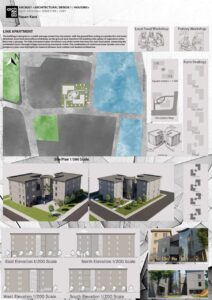
The “Link Apartment” project aims to reinterpret the housing typology not merely as an act of shelter, but as an urban and cultural “conjunction.” The primary design decisions are constructed upon the concept of physical and metaphorical “linking.” In this context, the structure integrates the existing circulation networks and pathways within the site, functioning as a permeable node that ensures the uninterrupted continuity of urban flow.
The project’s conceptual backbone extends beyond physical connections to undertake the mission of establishing a temporal bridge. Elements of intangible cultural heritage, such as traditional pottery craftsmanship and local culinary culture—which are on the verge of being forgotten—have been integrated into the project’s public program. The designed workshop areas carry the production practices of the past into the living spaces of the future, creating a ground for intergenerational cultural transmission. Thus, the project proposes a hybrid typology that blends modern residential life with local memory.
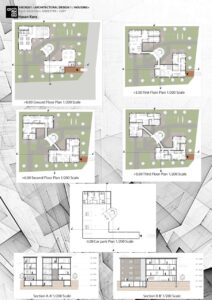
The structural composition is shaped by the dialogue between two “L”-shaped masses. These two main blocks create a defined void between them, hosting the transparent glass core which is positioned at the center of the structure and serves as the most striking architectural element of the design. Specialized with glass material, this vertical circulation core acts as the heart of the building, reducing the visual weight between the masses and adding transparency and lightness to the design.
The bridges extending from the core to the L-blocks go beyond being mere mandatory circulation elements; they are the spatial correspondence of the act of “linking” referenced in the project’s name. While offering semi-public encounter spaces to users, these bridges interlock the two separate masses both functionally and aesthetically. Consequently, Linked Apartment is conceived as a holistic “living machine” that carries circulation to the facade and volumetric plasticity, connecting the past with the future, the path with the structure, and the human with culture.