Project Explanation Report
ARCH201| Architectural Design I – Housing+
HİLAL YAZICI
LIVING WITH PRODUCTION HOUSING
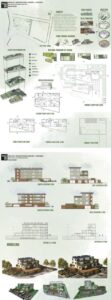
This project, developed within the scope of ARCH 201 Architectural Design I, proposes a mixed-use living model through the Housing+ approach, in which housing is not limited to the function of shelter but is redefined as a space for production, consumption, and social interaction. In response to the increasing functional segregation of contemporary urban housing, the project aims to create an integrated architectural structure that supports everyday life and strengthens community relations. Within this framework, housing is reinterpreted as an active component of the urban fabric rather than an isolated residential block.
The ground floor of the building accommodates a market that collaborates with local producers and a restaurant that operates in direct connection with the market. These two functions are linked both spatially and programmatically and are organized through a modular system that allows them to function independently or jointly when needed. This flexibility supports different usage scenarios while enhancing the continuity of public space. The transparent and permeable ground-floor design strengthens the relationship between the building and the street, encouraging public engagement and pedestrian movement. The upper floors consist of residential units designed with diversified plan typologies to accommodate different household types, while maintaining a balance between privacy and shared living.
The form-finding process evolved into a stepped massing strategy shaped by site geometry, environmental conditions, and solar orientation. This approach enables the creation of open and semi-open spaces while softening the building’s scale in relation to its surroundings. Balconies and terraces reinforce the relationship between interior spaces and the outdoors, allowing residents to maintain constant interaction with open areas. Controlled solid–void ratios on the façades support natural lighting and ventilation.
Sustainability is a key design driver of the project. Photovoltaic solar panels placed on the roof contribute to energy production, while grey water systems, green spaces, and passive ventilation strategies aim to reduce the building’s environmental impact. The use of natural wood cladding combined with light-colored surfaces ensures material continuity and establishes a warm, inviting architectural identity.
In conclusion, the Housing+ project integrates residential, productive, and public functions within a single structure, proposing a sustainable, flexible, and community-oriented living model. The building is conceived not only as a place of dwelling but also as a contemporary urban element that fosters social and economic interaction.