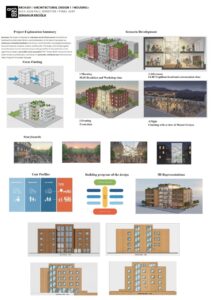
The “Vertical Street” project is an architectural intervention designed as a dynamic social infrastructure that redefines urban living by transforming traditional horizontal street life into a vertical dimension. Located in a developing urban context, the project aims to bridge the gap between private domestic life and public social engagement. At the heart of the design is a continuous circulation backbone—the “Vertical Street”—which acts as a social intensifier. This central core is not merely a path for movement but a destination in itself, encouraging spontaneous encounters between residents, creators, and the general public throughout the day.
Programmatic Organization and Spatial Flow
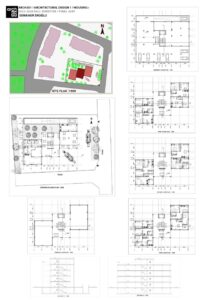
The building is organized as a permeable urban ecosystem, stacking diverse functions to create a vibrant micro-community. The ground floor is designed as an extension of the sidewalk, featuring a public plaza and interaction areas that invite the neighborhood into the building. As one ascends through the transparent central spine, the program transitions from public workshop spaces and co-working areas to private residential units on the upper floors. This programmatic layering ensures that the building remains active 24/7. The journey culminates in a panoramic rooftop terrace, which serves as a communal “crown,” reconnecting indoor living with the broader cityscape and providing a visual link to natural landmarks like Mount Erciyes.
Materiality and Technical Integration
The architectural language of the “Vertical Street” is expressed through a rhythmic interplay of solid and transparent volumes. The side wings, which house the more private functions, utilize a material palette of vertical wooden slats and exposed concrete panels. The wooden louvers serve a dual purpose: providing a warm, tactile aesthetic while offering essential solar shading and privacy for the interior spaces. In contrast, the central core is defined by a continuous glass curtain wall framed in sleek anthracite metal, making the internal social life visible to the city and turning the building into an “urban lantern” at night. This careful balance of materials ensures environmental comfort, structural clarity, and a strong contemporary identity within the urban fabric.