The Spiral Ascent
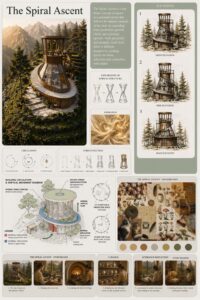
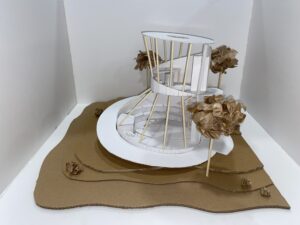
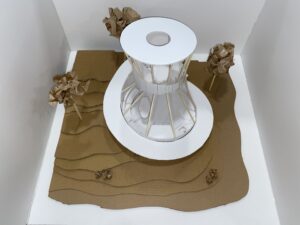
The Spiral Ascent is conceived as a small-scale retreat that explores the relationship between architecture, movement, and personal transformation through an immersive connection with nature. Inspired by the organic geometry of spiraling forms found in natural growth patterns, the project translates the idea of ascension into a spatial experience where architecture becomes both a physical shelter and a symbolic journey. The design follows a continuous upward circulation path that wraps around the structure, allowing the user to gradually move through different levels while experiencing changing perspectives of the surrounding landscape. This spiral movement represents a process of growth, reflection, and progression, transforming circulation into an experiential narrative rather than a purely functional element. At the ground level, the building establishes a direct relationship with the earth through open communal and productive spaces dedicated to ceramic making, connecting the act of creation with materiality and craftsmanship. As the journey continues upward, the spaces become increasingly private and contemplative, shifting from active production toward moments of solitude, reading, and reflection. The structural language emphasizes lightness and transparency through a timber framework combined with large glazed surfaces, strengthening visual continuity between interior and exterior. Natural ventilation and skylight integration further reinforce environmental responsiveness while maintaining a strong dialogue with the surrounding landscape. Ultimately, The Spiral Ascent proposes architecture as a gradual transition between making and resting, movement and stillness, grounding and elevation — creating a retreat where everyday rituals become part of a continuous journey of creation, introspection, and connection with nature.
Sanctuary of Clay: An EscapeCore Community


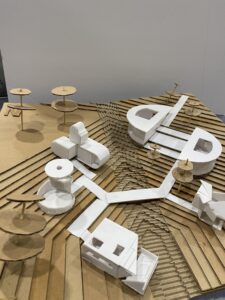
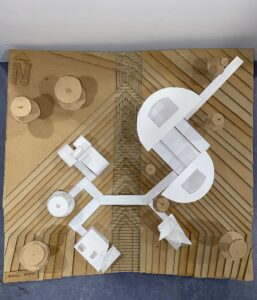
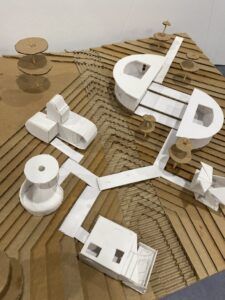
Sanctuary of Clay is a small-scale creative settlement designed around the idea of collective craftsmanship and meaningful human connection. Located within a natural landscape, the project brings together four ceramic practitioners through a network of production spaces, workshop areas, exhibition venues, and gathering points connected by pedestrian paths and integrated landscape elements. Rather than functioning as isolated buildings, these structures form an interconnected community where movement, interaction, and creativity become part of everyday life. The concept is inspired by the transformative journey of clay. Just as raw earth is shaped into a finished ceramic object through patience and collaboration, the project encourages individual expression while fostering a shared sense of belonging. The architecture is composed of modest, organic volumes that respond to the terrain and blend with the surrounding environment. Open spaces between the structures act as social thresholds where spontaneous encounters, conversations, and creative exchanges can occur. The pathways serve not only as circulation routes but also as symbolic links between production, learning, exhibition, and community life. Inspired by the EscapeCore concept, the project offers a retreat from the fast pace of urban life and promotes a slower, more mindful way of living. The earthy scent of clay, the quiet movement along winding paths, and the close relationship between architecture and nature create a calm and immersive atmosphere. This environment encourages both residents and visitors to reconnect with craftsmanship, creativity, and one another. As a ceramic artist living in the settlement, I begin my day by walking through the landscape toward my studio, passing fellow makers already engaged in their work. Throughout the day, the paths naturally lead me to shared workshops, gathering spaces, and exhibition areas where ideas and techniques are exchanged. Visitors observe the making process, participate in workshops, and experience the value of handmade production. In the evening, the community gathers outdoors, surrounded by clay, nature, and architecture. Sanctuary of Clay becomes more than a workplace; it becomes a living environment where creativity, craftsmanship, and human connection are continuously nurtured.