CHROMATIC DREAM CHAMBER
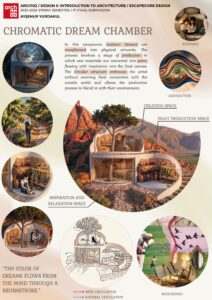
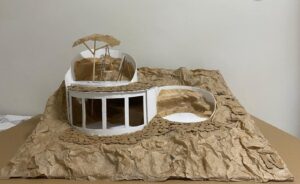
Chromatic Dream Chamber is an escapecore project inspired by a childhood memory of building temporary shelters from pillows and cushions. These improvised spaces created a sense of comfort, imagination, and separation from the outside world. The project transforms this memory into a spatial experience where dreams become a source of artistic production. The concept is based on the transformation of dreams into color and expression. The project consists of three interconnected functions: a resting space where dreams emerge, a pigment production space where natural materials are transformed into paint, and a creation space where these dreams are translated onto a canvas. Together, these spaces establish a continuous cycle between dreaming, producing, and creating. The circular form of the structure reflects this ongoing process of transformation. Rather than isolating the user from nature, the design maintains a strong connection with the surrounding environment through natural light, ventilation, and visual openness. Earth-based materials and natural pigments reinforce the relationship between creativity and nature, while the enclosing geometry creates a feeling of embrace, protection, and focus.
A typical day in the Chromatic Dream Chamber begins in the resting space. After waking, the user reflects on fragments of dreams and moves into the pigment production area, where colors are created from natural materials. These pigments become tools for interpretation and expression. The journey continues in the creation space, where dream imagery is transformed into paintings through a process of experimentation and reflection. Throughout the day, the architecture supports a gradual transition between imagination and reality, allowing dreams to become tangible artistic experiences.
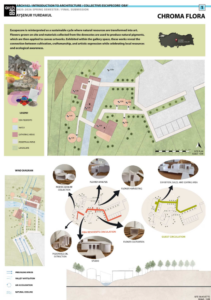
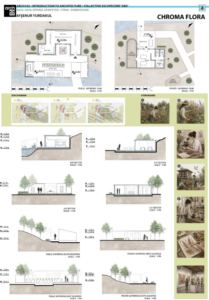
CHROMA FLORA
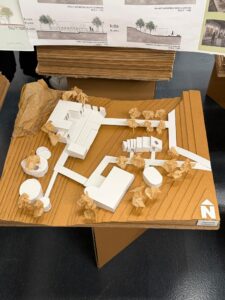
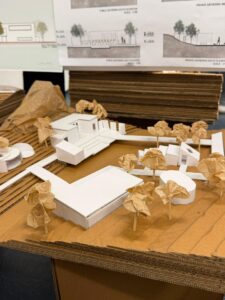
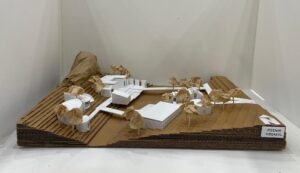
Escapecore is reinterpreted in this project as a spatial experience that reconnects people with nature through cultivation, craftsmanship, and artistic expression. Located along the route leading to the Hidden Church, Chroma Flora aims to enrich the visitor experience while increasing activity and public engagement within the area. The project establishes a sustainable cycle in which flowers cultivated on site are harvested and analyzed for natural pigment production. Organic materials collected from the dovecotes contribute additional resources to this process. These materials are transformed into natural paints within the production spaces, where local residents carry out the stages of cultivation, research, and craftsmanship. The architectural character of the project is defined by a series of smallscale structures integrated into the natural landscape. Gardens, gathering spaces, exhibition areas, and viewing points are connected through pedestrian paths that encourage exploration and discovery. The presence of water plays a central role in shaping the atmosphere, creating a calm and reflective environment. For visitors, the experience begins with a walk through the landscape and continues into the exhibition space, where artworks created with natural pigments are displayed and offered for sale. A small buffet and gathering area provide opportunities for rest and social interaction, while the seating platform extending over the water offers views of the surrounding landscape. By connecting nature, local production, and cultural experience, Chroma Flora creates a destination that supports the Hidden Church route while celebrating sustainability, local resources, and the relationship between nature and art.