THE HOOK
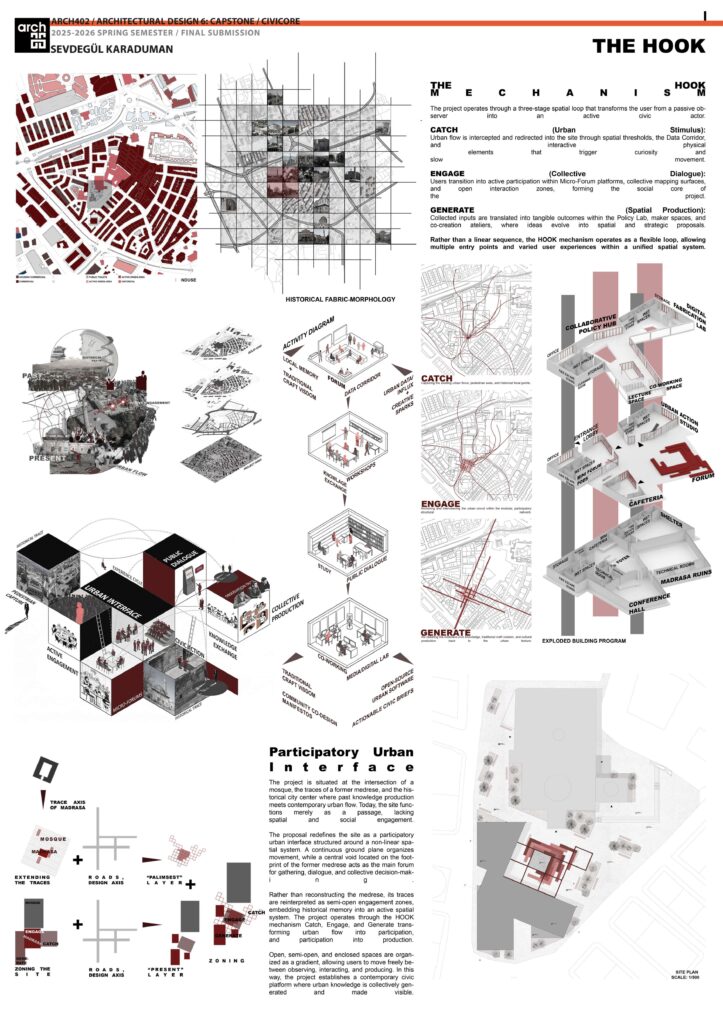
The Hook is an urban intervention project that aims to establish a new interface between historical heritage and contemporary urban life through collective production and public interaction. Located on a site that once accommodated a madrasa and today functions as an intersection within the urban circulation network, the project seeks not merely to introduce a new physical structure but to reactivate urban memory and transform it into an active spatial experience.
Rather than reconstructing the historical fabric literally, the proposal reinterprets its spatial logic through present-day social and urban practices. Within this framework, the concept of “HOOK” operates as a connecting mechanism that links urban flows, user participation, collective engagement, and knowledge production into a multi-layered spatial organization. The project encourages users to move beyond the role of passive visitors and become active participants who contribute, interact, and generate new forms of social exchange.
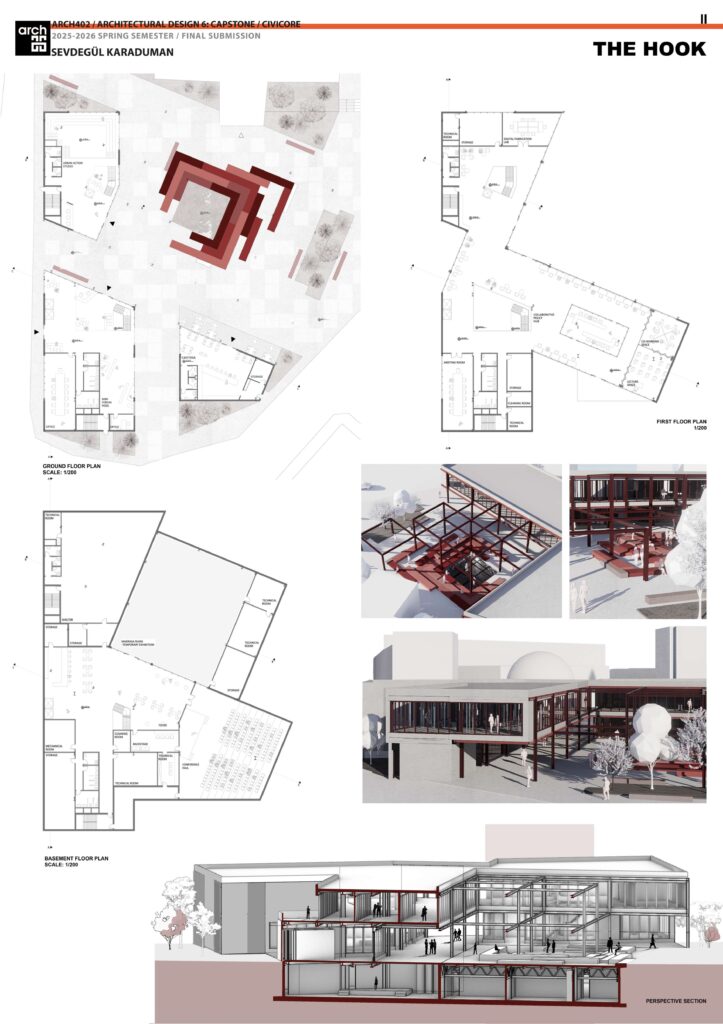
The spatial program is structured around a three-stage experiential sequence: Catch, Engage, and Generate. In the first stage, users are attracted from the surrounding urban fabric into the project through permeable circulation routes, micro-forums, and points of encounter. The second stage invites users into collaborative dialogue and collective production through workshop spaces, interactive platforms, and public gathering areas. In the final stage, ideas and social interactions are transformed into tangible outcomes through policy laboratories, creative workspaces, and shared production environments capable of generating broader urban impact.
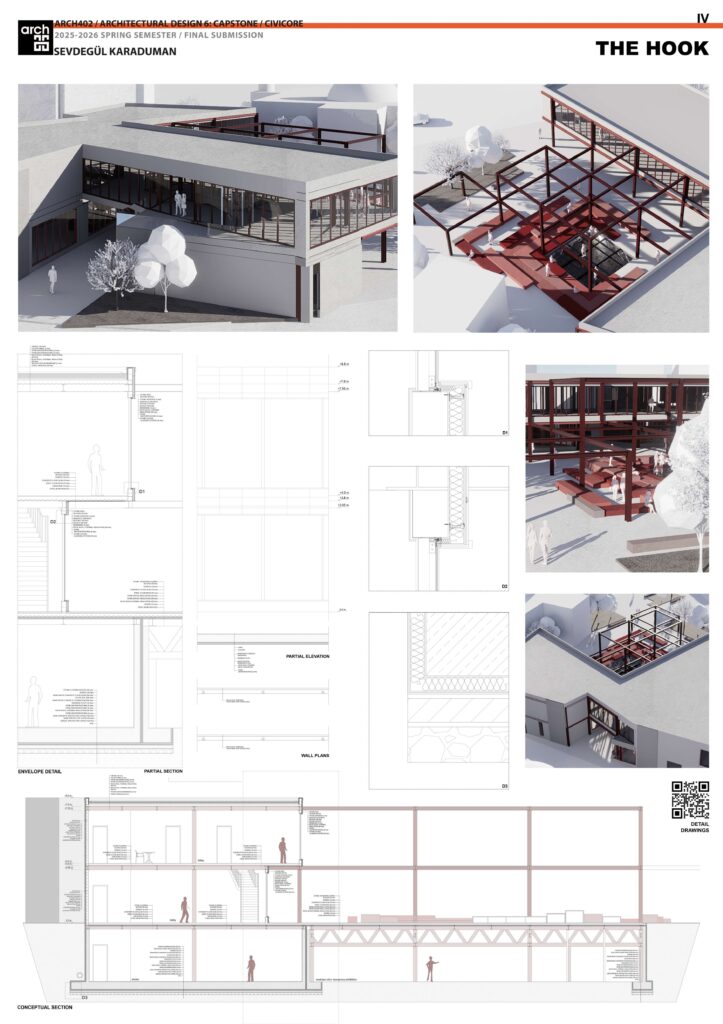
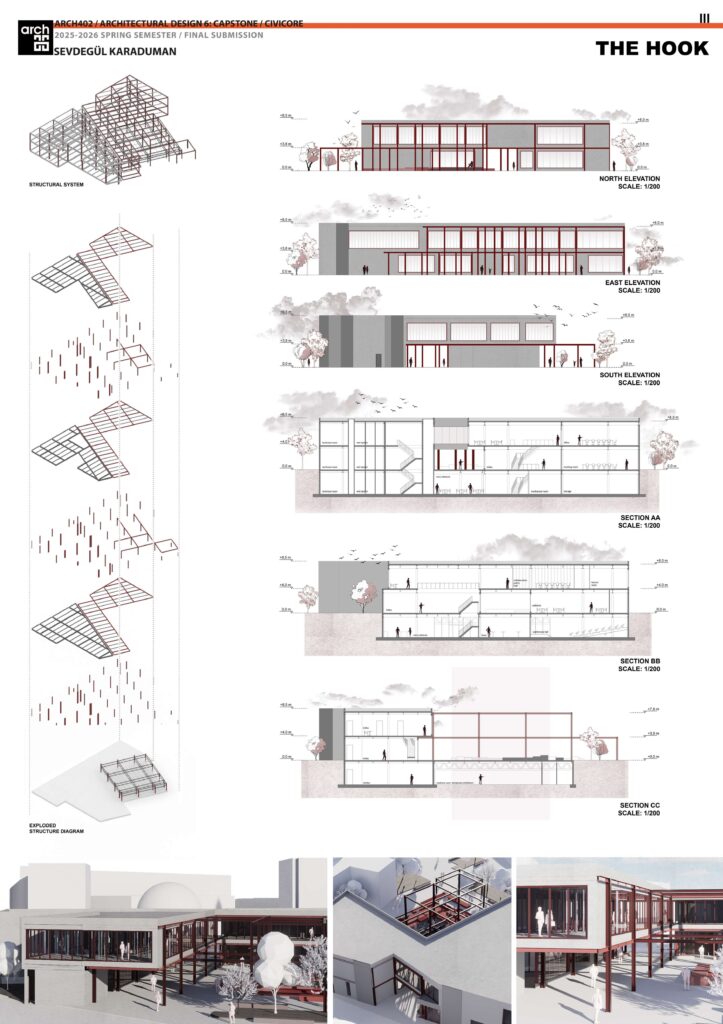
Structurally, the project proposes a modular and adaptable steel framework that allows spatial flexibility and supports changing patterns of use over time. Open and semi-open spaces reinforce visual continuity and strengthen the relationship between users and the existing urban context.
Ultimately, The Hook proposes a contemporary urban interface that preserves historical traces without reproducing the past, redefines public space as a dynamic environment for participation, and transforms the citizen from a passive observer into an active contributor within the city.